Key takeaways
- Kraft paper plus mineral oil is the default for oil-immersed transformers, Class 105.
- Aramid paper raises the thermal class to 180–220 °C.
- Glass fiber gives abrasion resistance and high temperature for motors and dry-type transformers.
- Polyimide film is the thinnest, highest-temperature covering, rated Class 240.
Why use covered wire at all
Enamel alone is thin. Large conductors in transformers and big motors see higher voltage between turns, heavy mechanical forces and, in oil transformers, a liquid dielectric. A wrapped or served covering adds thickness, strength and compatibility with the surrounding insulation system.
Comparison
| Covering | Thermal class | Strength | Typical use |
|---|---|---|---|
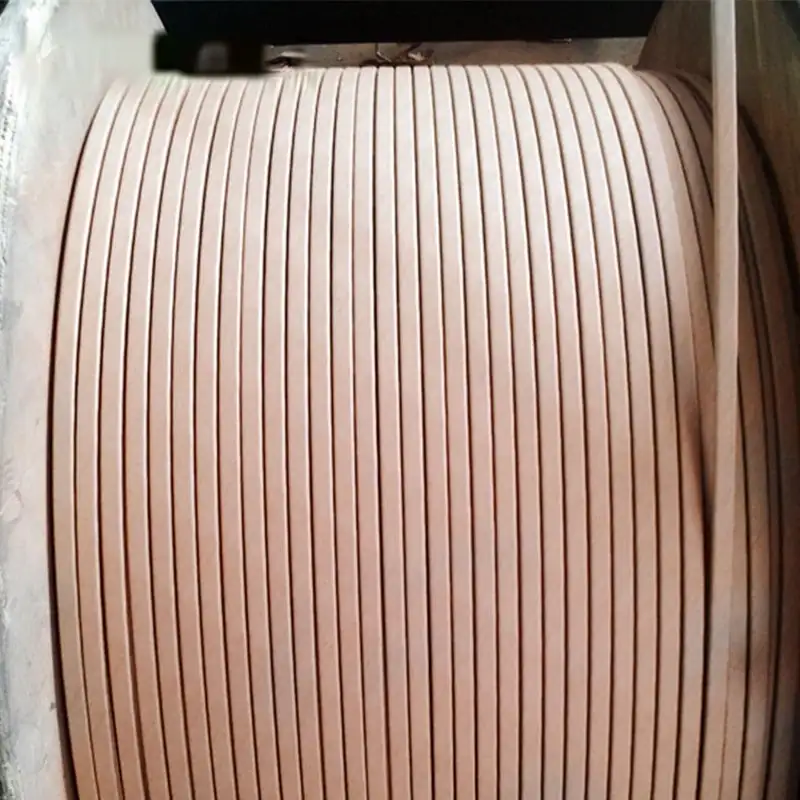
| Kraft / telephone paper | 105 in oil | Good dielectric when oil-impregnated | Oil-immersed distribution and power transformers |
| Aramid paper | 180–220 | High temperature, keeps strength when hot | Dry-type and high-temperature liquid transformers |
| Glass fiber | 130–200 | Abrasion and cut-through resistance | Traction motors, large motors, generators |
| Polyimide film | 240 | Thin build, high breakdown voltage | Submersible, high-voltage and aerospace coils |
Paper
Cellulose paper soaks up transformer oil and the combination has excellent dielectric strength. It is cheap and well understood, which is why it dominates oil-immersed transformers. Its limit is temperature: above about 105–120 °C paper ages quickly. See paper covered copper wire and paper covered aluminum wire.
Glass fiber
Glass yarn served over the conductor and bonded with varnish is mechanically tough. It survives forming of large coils and absorbs VPI resin well. It is the classic covering for traction motor and large machine windings. See fiberglass covered wire.
Polyimide film
Polyimide film gives the highest temperature rating and the thinnest build for a given dielectric strength. It costs more and is chosen where space and temperature are both critical. See polyimide film covered wire.
Deciding
Start with the insulation system. Oil-immersed: paper. Dry-type or hot oil: aramid. Large rotating machines: glass, often over enamel. Highest temperature or tightest space: polyimide film. Then size the build to your turn-to-turn voltage and tell us; we will wrap to that build.
Frequently asked questions
Why is paper used in oil transformers?
Cellulose paper impregnated with mineral oil forms a strong, economical dielectric system, and the paper is fully compatible with the oil.
Is fiberglass covered wire better than paper?
It handles higher temperatures and abrasion, but it is not the normal choice for oil-immersed transformers, where paper and oil work together. Choose by insulation system.
Need help choosing?
Send your application and operating temperature. We will recommend the wire and quote it.